

Picture this: It’s the first day of school. Your students shuffle into your math classroom, sit down, and brace themselves. They’ve already sat through three or four periods of other teachers reading aloud a bulleted list of classroom rules, grading policies, and bathroom procedures. They are completely checked out before you even introduce yourself.
We’ve all been there, and we get why it happens. Setting a rigorous, structured tone from day one is vital for secondary classroom management. But reading a syllabus line by line doesn’t build a culture of high expectations—it just builds a room full of glazed-over eyes.
What if, instead of lecturing on compliance, you threw your students directly into a challenge? What if day one felt less like an administrative meeting and more like an adventure?
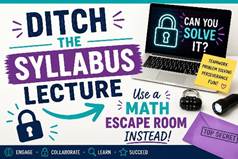
Ditching the syllabus drill in favor of a digital escape room during the first week of school doesn’t mean sacrificing rigor. In fact, it’s the ultimate shortcut to establishing a collaborative, tech-ready math environment while giving you invaluable insights into your new roster.
I still remember the first year I replaced my “syllabus lecture” with an escape room. Twenty minutes into class, students who had never met each other were debating answers, sharing calculators, and celebrating every lock they cracked. By the end of the period, I had learned more about my students than I ever did during a traditional first-day lecture.
Here is why a digital escape room is the best way to kick off your first week of math class.
1. It Tests Tech-Readiness Before the Real Curriculum Starts
There is nothing worse than launching your first major academic lesson of the year only to lose 20 minutes because half the class can’t figure out how to split their screens, access an interactive site, or troubleshoot a basic link.
A digital escape room acts as a low-stakes “dry run” for your classroom technology. It forces students to navigate digital interfaces, type code combinations exactly as requested, and work within your tech ecosystem. If a student’s device is blocked by a school firewall, or if they struggle to use an interactive platform like Genially, you can iron out those tech wrinkles now—before a single grade is on the line.
2. It Builds Genuine Teamwork and Communication Skills
We tell our students that collaboration is key in modern math classrooms, but we rarely teach them how to do it. Group icebreakers can feel forced and awkward for self-conscious teenagers.
An escape room provides an immediate, common objective that bypasses the awkward small talk. Students have to talk to each other to decipher the clues. They have to argue productively about logic, double-check each other’s thoughts, and listen to different perspectives to unlock the next level. You are building the muscle memory for group work that you will rely on all year long.
3. It Establishes a Culture of Low-Stakes Perseverance
Math anxiety is real, and the secondary level is where it hits hardest. When students walk into a math class expecting a dry pre-test or a rigid syllabus lecture, their defenses go up.
An escape room flips the script. Because it’s gamified, failure doesn’t feel punitive. If a code doesn’t work, students don’t stare at a red pen mark; they simply re-read the clue, look for a different pattern, and try again. You’re immediately establishing that your classroom is a safe space to fail, pivot, and problem-solve creatively.
4. It Can Actually Assess Prerequisite Knowledge
Escape rooms can be specifically designed to assess prerequisite knowledge in an engaging, immersive way. I actually had an Algebra student walk in on the first day and say: “You’re the teacher that does escape rooms on the first day, right?”
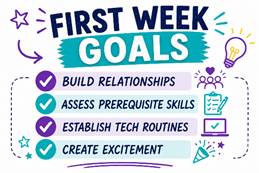
Escape rooms are invaluable tools. Within one class period, you’ll quickly discover:
- Who remembers prerequisite skills
- Who works well independently
- Who naturally takes leadership roles
- Which students struggle with perseverance
- Which students need technology support
That’s far more useful than a traditional paper pretest that tells you only whether a student got an answer right or wrong.
How to Handle the Actual Syllabus
“But wait! When do I tell them about my late work policy?!”
Don’t worry—your procedures are still important. But instead of dedicating the entire first day to them, try these secondary-friendly alternatives:
- The Syllabus Scavenger Hunt: Make finding the class rules the final “envelope” after completing the escape room.
- The Day Two Flip: Spend day one building excitement, community, and tech norms. On day two, when they already know and trust you a little bit, spend the first 15 minutes handling the essential administrative details.
Ready to Start the Year Differently?
If you’re looking for a first-week activity that combines prerequisite review, teamwork, technology practice, and student engagement, I’ve created Back-to-School Readiness Escape Rooms for:
Each activity reviews prerequisite skills while helping you learn about your students from day one.
Next up in this series, we are going to look at how you can use back-to-school readiness escape rooms to assess student prerequisite skills seamlessly, without a single sheet of daunting diagnostic paper.
Want to save this post for your summer planning? Pin it to your favorite Math Teacher board on Pinterest!