

As math teachers, we make hundreds of micro-decisions every single day. From adjusting a lesson on the fly to answering a steady stream of student questions, the constant choices add up fast. By the end of seventh period, it’s no wonder decision fatigue sets in!
While we can’t predict every variable in a middle or high-school day, we can protect our energy by eliminating repetitive daily decisions before school even starts. Setting up clear, predictable systems for routine classroom scenarios doesn’t just save your sanity—it creates a structured, low-anxiety environment where students can thrive.
Here are 6 key decisions to make before students walk through your door this year that will save you hours and stress down the road.
1. What happens when students finish early?
Every teacher knows the drill: two minutes into independent practice, a student raises their hand and asks, “I’m done, what do I do now?” Without a plan, you’re forced to improvise tasks on the spot or manage off-task behavior.
The Solution: Establish an “Early Finisher System” on day one.
Create a designated digital or physical hub of self-directed practice activities. To keep motivation high, offer a clear incentive—such as earning a “Free Missing Homework Pass” after completing a set number of extension tasks.
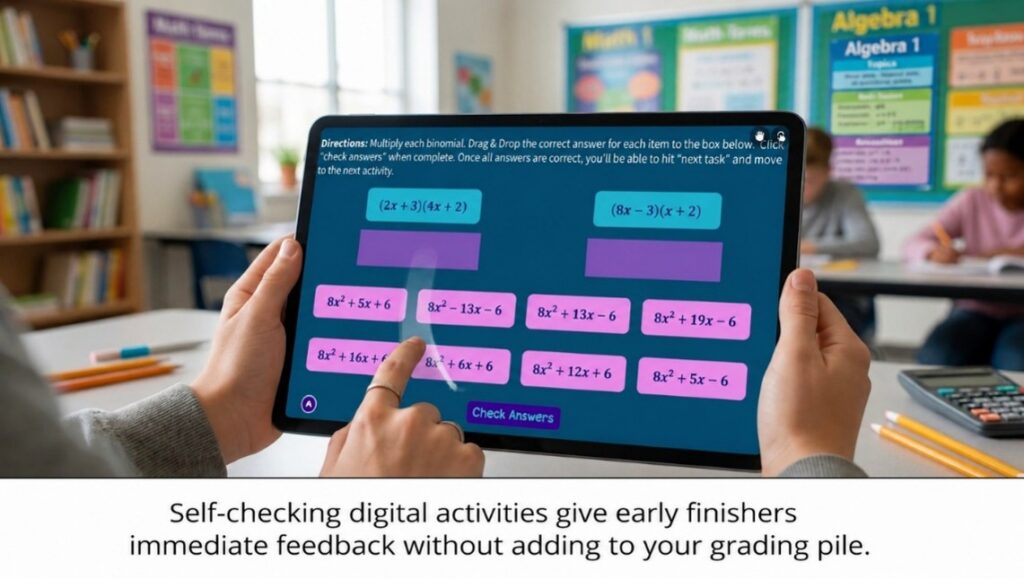
To prevent this system from adding to your grading pile, rely heavily on digital self-checking activities. Resources like this Multiplying Binomials Self-Checking Practice allow students to get immediate feedback on their math skills without you having to grade a single paper. Students stay productively engaged, and you can focus on helping those who need extra support.
2. Where do absent students find work?
If there’s one phrase that causes collective teacher cringe, it’s: “Did I miss anything while I was out?”
Answering this question individually for multiple absent students every day drains valuable teaching and prep time.
The Solution: Build a self-serve absent routine so the answer is never “Ask me.”
- For Middle School: A Partner Buddy System works wonders. Assign each student an “Absent Buddy” whose job is to collect extra handouts and write down warm-ups or announcements when their partner is away.
- For High School: A Digital Class Calendar posted on your teacher website or Learning Management System (LMS) is essential. Post daily topics, linked assignments, and homework details consistently. When an absent student returns, train them to check the digital calendar first before approaching you with specific questions.
3. What happens when technology fails?
Digital learning tools make math practice dynamic, engaging, and easy to monitor—until the Wi-Fi drops, laptops aren’t charged, or a website goes down. Scrambling for a backup plan in the middle of a lesson creates unnecessary panic.
The Solution: Build a low-stress tech contingency plan into your weekly prep.
Keep a binder or folder of “evergreen” paper-based math activities, maze printables, or generic problem-solving prompts that align with your current unit. Knowing you have a physical backup ready to go takes the pressure off whenever a tech hiccup strikes.
4. How will you start class every day?
The first five minutes of class set the tone for the entire period. If students enter to noise and uncertainty while you’re trying to take attendance or handle individual requests, class management becomes an uphill battle.
The Solution: Implement a predictable entry routine.
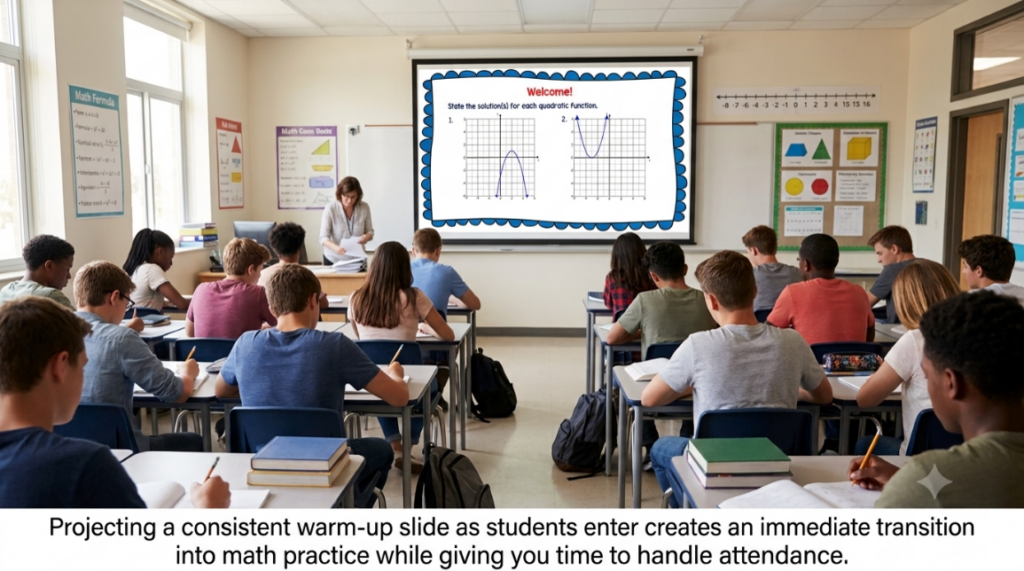
Display a daily warm-up on the board before students enter. Whether it’s a spiral review problem, an error-analysis task, or a quick puzzle, make it a strict expectation that students begin working as soon as they sit down. This creates an immediate transition into “math mode” and gives you five quiet minutes to take attendance, check in with a student, or gather your materials. Check out my full year Algebra 1 Warm-ups here: Algebra 1 Warm-Ups.
There’s also a freebie version with 8 days of warm-ups; check that out here: Algebra 1 Freebie.
5. How will students turn in work?
Unclear turn-in procedures lead to missing assignments, lost papers, and endless emails asking, “Did you get my work?”
The Solution: Standardize separate, non-negotiable processes for physical and digital work.
- For Digital Work: Pick one primary submission platform (like Google Classroom or your school’s LMS) and stick with it. Train students on the exact steps for submitting digital self-checking sheets, escape rooms, or documents during the first week.
- For Physical Work: Designate labeled turn-in bins for each class period in a specific area of your room. Make it a rule that work is only considered turned in if it is placed in the designated bin—never handed directly to you while you’re teaching.
6. What is your late work policy?
Handling late work ad hoc throughout the year is basically chaos. It leads to endless negotiations, parent misunderstandings, and a mountain of late grading right before report cards are due.
The Solution: Establish a firm, transparent policy early and communicate it often.
Decide on your boundaries ahead of time:
- Will you accept late work for full credit, partial credit, or up to a specific deadline before each unit exam?
- How will students notify you when they turn in late digital assignments?
Write this policy clearly in your syllabus, post it on your class website, and send it home to parents during the first week of school. When a late work situation arises, you won’t have to decide what to do—you simply refer back to the established policy.
Final Thoughts
Setting up these six routines requires a little thought upfront, but the payoff during the school year is massive. By turning routine management tasks into predictable systems, you reclaim your mental energy for what actually matters: helping your students master math and enjoying your teaching journey!